
Bitcoin (BTC) overcame volatility on Thursday as US stocks rebounded on relief from inflation data.
Key points:
- Bitcoin avoids an instant reaction to US personal consumption expenditure (PCE) inflation data, reversing a local uptrend.
- The analysis remains cautious with regard to inflationary trends despite a PCE in line with expectations.
- Bitwise predicts that in the future, Bitcoin will become less sensitive to Fed interest rate changes.
PCE Ends Uptrend While Staying Above Fed Inflation Target
Data from TradingView showed that BTC price action was focused around $64,500, broadly unchanged from the previous day.
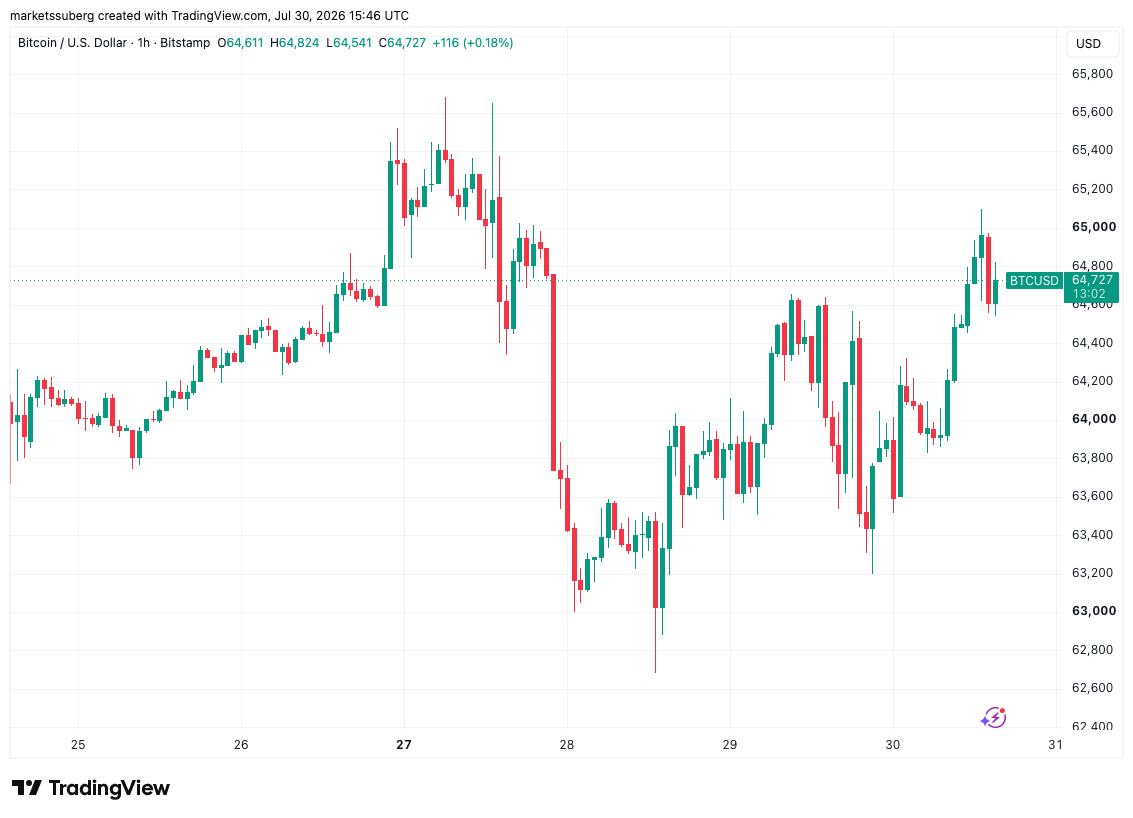
BTC/USD one hour chart. Source: Cointelegraph/Trading View
Risk assets’ main headwind from earlier in the week, in the form of a selloff in semiconductor stocks, eased on the day, sparing the crypto during the U.S. trading session. The S&P 500 Index and Nasdaq Composite Index were up 1% and 2.3%, respectively, at the time of writing.
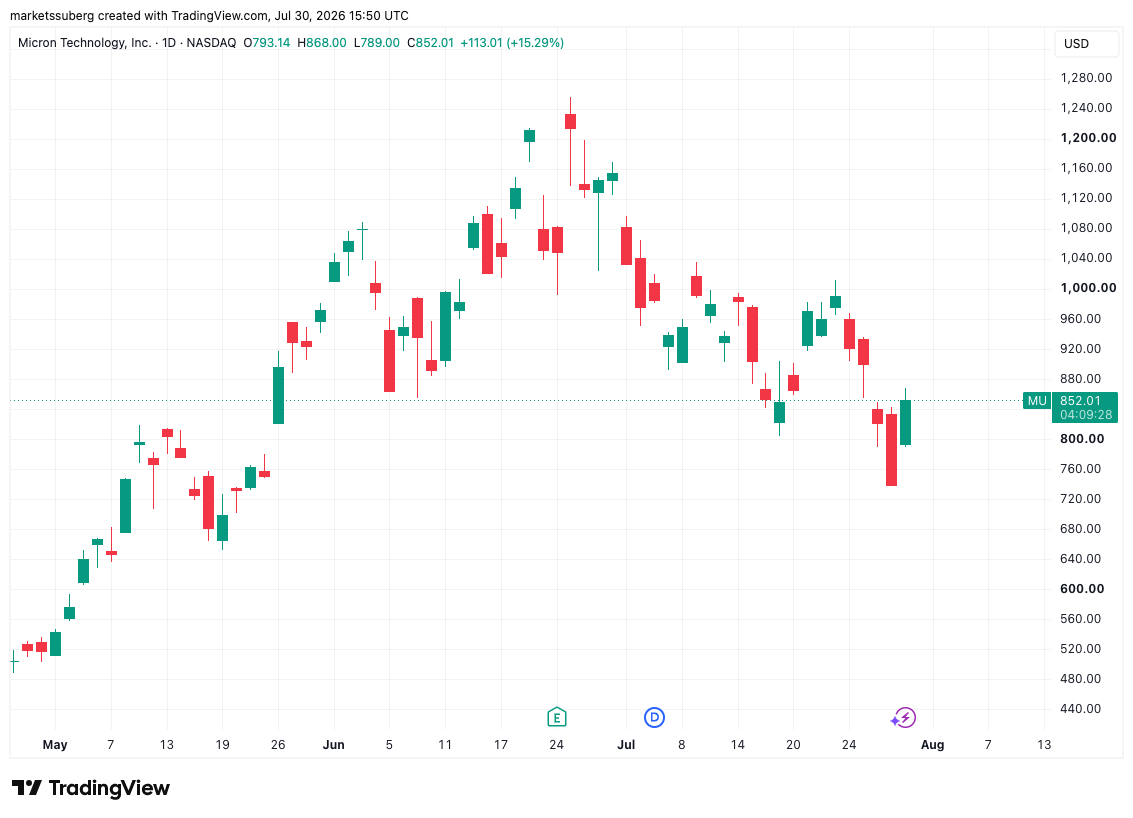
One-day chart of the Nasdaq Composite Index. Source: Cointelegraph/TradingView
The June release of the US Personal Consumer Expenditure (PCE) index added another positive catalyst, coming in at 3.7% year-on-year, in line with market expectations. The May PCE figure, at 4.1%, was the highest in three years.
PCE is considered the Federal Reserve’s preferred inflation measure because it offers a broader, more comprehensive measure of inflation and more quickly detects adjustments in consumer choices in response to price changes, according to at the Federal Reserve Bank of Cleveland.
“The increase in personal income in current dollars in June primarily reflected increases in wages, personal income from assets, and government welfare benefits that were partly offset by a decrease in the income of farm owners,” the U.S. Bureau of Economic Analysis (BEA) said. said. The BEA said in its data release:
“The $65.2 billion increase in current dollar PCE in June reflects an increase of $58.2 billion in spending on services and $7.0 billion in spending on goods.”
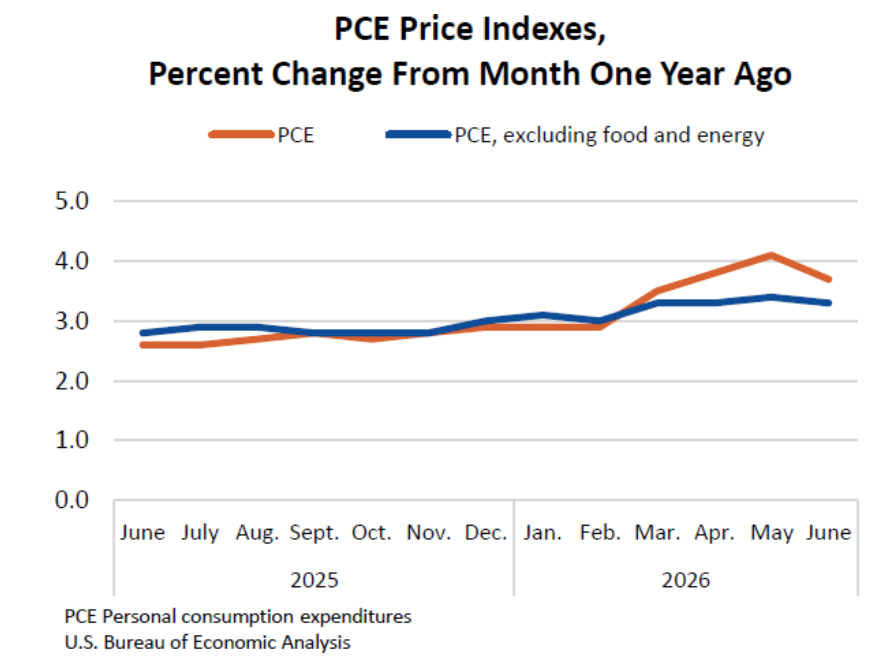
Changing the percentage of US PCE data (screenshot). Source: BEA
While ending an upward trend in PCE figures and showing the first monthly decline since 2020, the June figure sparked conservative reactions. The Kobeissi Letter notes that the figure of 3.7% remains the second highest result since October 2024.
“US inflation continues to reach almost double the Fed’s 2.0% target,” it says. said on X.
Steve Hanke, economist at Johns Hopkins describe inflation is seen as “the genie that the Fed just can’t put back in the bottle”, while also noting the lag with its 2% target.
Bitwise CIO sees BTC ignoring future rate indices
The Federal Reserve left interest rates unchanged at its latest meeting on Wednesday, with division emerging among members of the Federal Open Market Committee (FOMC) over the appropriate policy.
Related: South Korean crypto exchanges surge amid stock market plunge
Following the event, Matt Hougan, chief investment officer at crypto asset manager Bitwise, predicted that future interest rate announcements would have less impact on BTC price performance.
“Rationale: Throughout Bitcoin’s history, interest rates have fluctuated dramatically – from 0% to 2.5%, then from 0% to 5% and back to 3.5%. Changes were measured in whole percentage points. But future changes likely look more modest; the CME expects a 50 basis point hike over the next year,” he said. said X subscribers, referring to rate expectations as measured by the CME Group FedWatch tool.
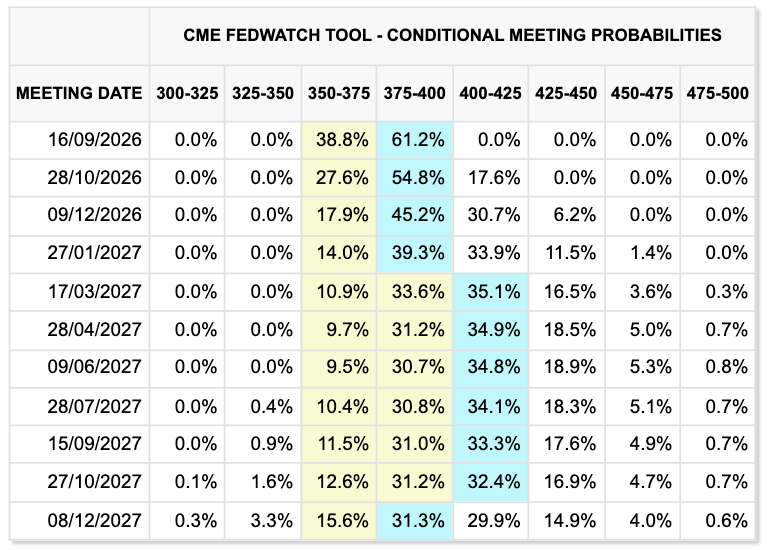
Fed target rate probabilities (screenshot). Source: CME Group
Hougan said new Fed Chairman Kevin Warsh would likely echo former Chairman Alan Greenspan with the magnitude of the rate changes, departing from that of his immediate predecessor, Jerome Powell.
Prior to Warsh’s nomination, US President Donald Trump had repeatedly hinted that he expected Warsh to take a dovish stance on the issue, a move that would bolster the performance of risk assets.
About the Author


